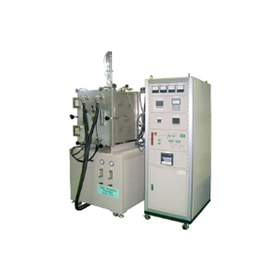
We have compiled a list of manufacturers, distributors, product information, reference prices, and rankings for Small carbon furnace.
ipros is IPROS GMS IPROS One of the largest technical database sites in Japan that collects information on.

Small carbon furnace - List of Manufacturers, Suppliers, Companies and Products

Small carbon furnace Product List

1~5 item / All 5 items

Displayed results

Small carbon furnace

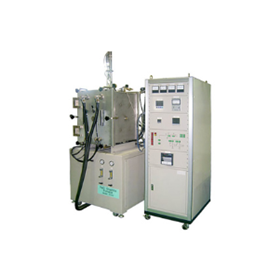
Oxygen concentration can be reduced to the limit, preventing oxidation! By improving the crystallinity of carbon materials, lifespan and performance are significantly enhanced.

The "carbon furnace" is a super high-temperature heating furnace composed entirely of graphite (carbon) for the heater, insulation, and furnace walls. It is capable of heating in the high-temperature range of around 3000°C, which is difficult to achieve with conventional electric furnaces, while also keeping the oxygen concentration inside the furnace to an extremely low level. It is suitable for processes that require high crystallization of carbon materials and sintering of ultra-high melting point metals, where high temperature and low oxygen are essential. 【Features】 ■ Super high-temperature capability ■ Low oxygen atmosphere ■ Suitable for high crystallization treatment ■ Compatible with a wide range of materials *For more detailed information, please download the materials or feel free to contact us.

  • Industrial Furnace
  • Small carbon furnace

Added to bookmarks

Bookmarks list

Bookmark has been removed

Bookmarks list

You can't add any more bookmarks

By registering as a member, you can increase the number of bookmarks you can save and organize them with labels.

Free membership registration

Why low oxygen and ultra-high temperature can be achieved: Small-scale carbon furnace

Suppressing micro leaks through years of seal design, processing precision, and assembly procedures! Maintaining low O2 even during long operation.

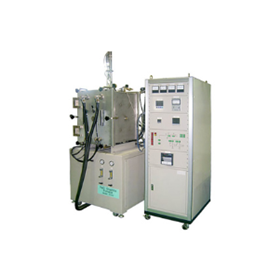
We will introduce why our small carbon furnace can achieve low oxygen and ultra-high temperatures. The carbon furnace material reacts with residual oxygen, featuring a design and manufacturing know-how that ensures it does not "leak." It removes air from inside the powder using a vacuum pump and replacement method. With a high emissivity graphite heater, a uniform heating hot zone, and high insulation, it efficiently heats while avoiding local overheating, making it possible to stably reach temperatures up to 3000°C. 【Features of the Small Carbon Furnace】 ■ Capable of reaching temperatures up to 3000°C: Quickly achieves ultra-high temperatures through the radiant heat of the graphite heater. ■ Easy to sinter in low oxygen: The carbon inside the furnace reacts with residual O2. ■ Air inside the powder is also replaced: Reduces O2 between particles through repeated vacuum and inert gas cycles. ■ Suppresses temperature variation: Reduces differences in the center, edges, and thickness direction with a "uniform heating zone" that warms evenly. *For more detailed information, please download the materials or feel free to contact us.

  • Industrial Furnace
  • Small carbon furnace

Added to bookmarks

Bookmarks list

Bookmark has been removed

Bookmarks list

You can't add any more bookmarks

By registering as a member, you can increase the number of bookmarks you can save and organize them with labels.

Free membership registration

Series Start: The Power of Small Carbon Furnaces

Explaining the capabilities of small carbon furnaces from a practical perspective! We will also introduce challenges and benefits.

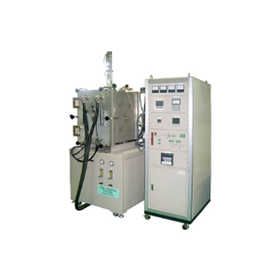
"Although the temperature can be achieved, the targeted reaction site cannot be created." We will overcome that barrier with a small carbon furnace. In this series, we will explain the capabilities of a small carbon furnace that can reproducibly handle extremely low oxygen atmospheres (O2 ppm level) and ultra-high temperatures (2,000-3,000°C range) from a practical perspective. Do you face these challenges? ■ Heating can be done, but slight oxygen contamination causes variations in properties ■ Large furnaces have slow ramp-up times, making it difficult to establish conditions ■ Temperature unevenness and undercooking lead to instability in crystallinity and pore structure Benefits of miniaturization × extremely low O2 × ultra-high temperature ■ Reach target temperatures quickly → increases the number of trials per day ■ Ensures uniform heating even with small samples → improved reproducibility ■ Balances oxygen management and thermal history → achieves desired crystalline phases, conductivity, and microstructure In this series, we will sequentially introduce the development background, heating principles, application-specific know-how, safety design, specifications & expansions, mini case studies, and FAQs. *For more detailed information, please download the materials or feel free to contact us.

  • Industrial Furnace
  • Small carbon furnace

Added to bookmarks

Bookmarks list

Bookmark has been removed

Bookmarks list

You can't add any more bookmarks

By registering as a member, you can increase the number of bookmarks you can save and organize them with labels.

Free membership registration

Serialized Part 2: Background of the Development of Small Carbon Furnaces

Introducing the challenges in the research field, potential solutions, and concepts!

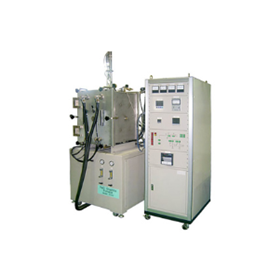
While the demand for dry reduction heat treatment is increasing, the following challenges are prominent on-site. ■ Challenges in Research Environments - Limitations on maximum achievable temperature (recipe design is constrained by material and structural upper limits in tubular furnaces) - Limitations on sample preparation volume (effective heating area is narrow, making it unsuitable for scale considerations) - Difficulty in maintaining extremely low oxygen levels (ppm to ppb range) (due to leaks, residual O2, and fine cracks from heat shock, etc.) ■ Directions for Solutions (Required Specifications) - Uniform heating in a short time: rapid temperature rise, high temperature uniformity, and good response - Flexible scaling: continuous support from small sample sizes to small-scale mass production - Atmosphere control: stabilization of extremely low oxygen levels with Ar/N2 (with small amounts of H2 as needed) and low residual O2 design ■ Concept Graphite heating element × high insulation structure × low leak design. A compact carbon furnace optimized for prototyping and condition setting, enabling faster and more reproducible dry reduction processes. *For more detailed information, please download the materials or feel free to contact us.

  • Industrial Furnace
  • Small carbon furnace

Added to bookmarks

Bookmarks list

Bookmark has been removed

Bookmarks list

You can't add any more bookmarks

By registering as a member, you can increase the number of bookmarks you can save and organize them with labels.

Free membership registration

Serial Part 3: The Principle of Small Carbon Furnaces

Why extreme low oxygen and 3000℃ levels are possible! Explaining the principles of a small carbon furnace.

The small carbon furnace is characterized by its ability to maintain an extremely low oxygen environment and ultra-high temperatures (around 3000°C). In this explanation, we will simply clarify "why this is possible" from a fundamental perspective. 1) Why does it become "extremely low oxygen"? ■ The furnace material itself is an "oxygen getter." The hot zone of the furnace is composed of carbon (graphite). Residual O2/CO2/H2O reacts with carbon and is reduced and fixed as CO/CO2, effectively lowering the oxygen activity. As a result, even materials that are sensitive to oxidation can be processed in a mild atmosphere. ■ Built-in vacuum system + replacement Before heating, the system is evacuated, and by repeatedly purging with inert gas (such as Ar/N2), the air inside the sample can be expelled in advance. This is effective for gas replacement in pores and powder gaps that cannot be reached by simple "ventilation." 2) Why is "3000°C" possible? ■ Heating element = high-temperature stability of graphite Graphite exhibits extremely high heat resistance under inert atmospheres and vacuum, allowing for efficient heating of the hot zone through resistance heating. *For more detailed information, please download the materials or feel free to contact us.

  • Industrial Furnace
  • Small carbon furnace

Added to bookmarks

Bookmarks list

Bookmark has been removed

Bookmarks list

You can't add any more bookmarks

By registering as a member, you can increase the number of bookmarks you can save and organize them with labels.

Free membership registration

Related Categories of Small carbon furnace